Uclan, 9781916747425
We have been very lucky over the last decade or so to have seen a wonderful growth in the number and quality of chapter books, aimed at the emerging reader. Tracy Curran’s new title is a hilarious tale of a magical place called ‘Witchy Wood’. When two young dragons accidentally set fire to the wood (breathing fire is a hazard!) it is up to the heroic firefighter Blaze, together with her fire engine Quench, to save the day.
As part of the tour to celebrate the launch of this fantastic story, Tracy has very kindly written about five of the books that have inspired her to write for this age group. I was more than delighted to discover that they are all books that I have read and reviewed in the past, and I have to agree with her assessment, they are all fabulous reads.
MY TOP FIVE CHAPTER BOOKS
Tracy Curran
Chapter books are so much fun! I love everything from their colourful covers to their loveable characters. The joy of a chapter book series is that you can meet your favourite characters over and over again for new adventures and they are short enough to read in one afternoon.
1) Unipiggle by Hannah Shaw

Usborne, 9781474972178
It’s such a treat to read a Unipiggle book. Unipiggle is an hilarious character and Hannah Shaw has put a brilliant spin on a unicorn with stories to suit everyone: a unipig who can turn things into chocolate by touching them with her horn. What’s not to like?
As with Unicorns in Uniforms, the books are illustrated in full-colour throughout which makes them literally leap off the bookshelf. Hannah Shaw has also included seasonal instalments such as Fairy Freeze and Witch Emergency. Each story is action-packed and completely entertaining – it’s my go-to rainbow mood booster!
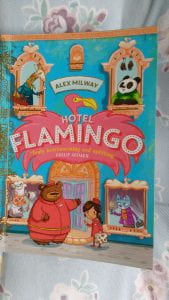
2) Hotel Flamingo by Alex Milway

Piccadilly Press, 9781848127753
A hotel for animals is such a great concept and Alex Milway has packed this series with great characters and storylines that readers of all ages can enjoy. The main character, Anna – the girl who inherits the hotel – is full of determination and I love the charm and flamboyance of all the animal characters too, especially the flamingos. There’s some great villains in this series including the hotel inspector and the owner of a rival hotel. A special mention goes to Madame Le Pig, the chef, for being a particularly hilarious character.
3) Adventuremice by Phillip Reeve and Sarah McIntyre

David Fickling, 9781788453288
Who doesn’t love an adventure on the high seas? Or even on the moon? This chapter book series reminds me of the books and TV programmes I devoured as a child like The Moomins and Button Moon. The mice are brilliantly resourceful, each with different personalities, and each story takes us to a new setting: underwater, into space or onto a ghostly galleon ship (my favourite). The adventures are just great fun with lots of humour and peril and yet, you kind of know that things will be okay in the end because the Adventuremice will save the day.

Bloomsbury, 9781408889312
4) Fabio, The World’s Greatest Flamingo Detective by Laura James, illustrated by Emily Fox
As you can probably tell, I love flamingos but I also love detective stories too! This series is really fun. I’m not sure Fabio is quite as clever as he thinks he is but he always gets there in the end and there are lots of twists and turns in the storylines. Animal characters are great to write (and to read about) because they often have really bold personalities and you can play around with stereotypes. For example, flamingos are usually portrayed as being very outgoing and flamboyant and lions can be quite fierce and scary. So I love it when authors play around with that and come up with something different.
5) Diary of an Accidental Witch by Honor and Perdita Cargill, illustrated by Katie Saunders

Stripes, 9781788953382
I can’t choose another animal story again! Instead, I’m tuning into my love of witches. The Diary of an Accidental Witch series, told in diary format, is a modern day Worst Witch. Bea Black is a human who accidentally ends up going to a witch school. The adventures that follow are full of hilarious mishaps and lots of problems that Bea has to overcome. It’s so well-written and hugely entertaining with great illustrations – I struggled to put the books down.
It’s been so hard to choose only five. There are lots of incredible chapter books out there with stories to suit everyone. Happy hunting!


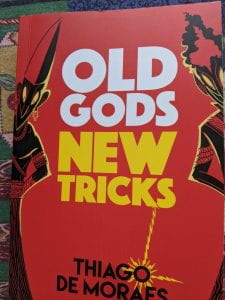 mythologies of other parts of the world. It was only when I became a teenager that I began to hear about South American, Asian, African and then American stories. However, these are not myths that are widely known or written about and it is only in the last few years that people have felt able to write about their cultural beliefs and histories; or at least that is my perception, so I apologise if I am wrong about this. I was delighted to read this wonderful story of the Trickster gods, a concept that seems to appear in so many mythologies but about whom I had little knowledge, apart from Loki who is a favourite character at the moment.
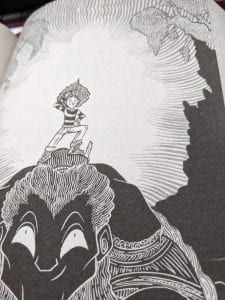
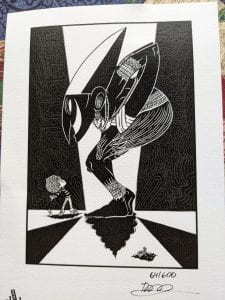 real sense of attitude, so that we really enjoy their antics and the interaction between them. We also see these gods develop a real feeling of friendship with our young heroine, which means they start working together as an approximation to a team. Trixie is a really feisty young girl who learns a lot through the adventures that she goes through. There is a lot of growing up and an understanding that life does not always change in the ways you imagine when you start on a journey. The author is also a very talented artist and his illustrations for the book really focus on the wide ranging cultures that are represented; the black and white images really add to the overall sense of foreboding that we feel as the world begins to descend into darkness. This story also highlights the dependence that this world has on the use of electricity. Even for those of us who grew up without computers, mobile phones and other digital
  resources , it is still difficult to imagine going back to the days before this source was available. In a real sense this book provides a call to look after our natural resources and not squander what we have.
 old friends that I could invite to join in an adventure (much like Trixie, the book’s protagonist, does.) What attracts me to tricksters, beyond their rebellion and creative force, is how fun their stories are. Humour can sometimes be hard to find in myth, so these tales have always stuck with me. Finally, I learned of Huehuecóyotl (and countless other gods I hadn’t know about) whilst researching a non-fiction book I wrote called Myth Atlas, which features lots of stories from different societies.
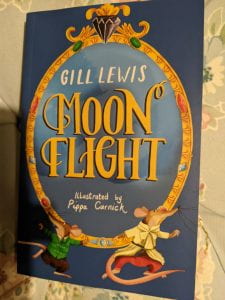 writers have a variety of stories they want to tell. I did enjoy being released from detailed factual research and building the world of the highly anthropomorphised Dockland Rats.
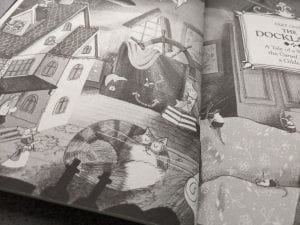 Tilbury’s world, following him on his adventures, the twists and turns of the story happening organically as I wrote. I think I needed a change from my usual stories that are based in the real world, and to travel to new unexplored worlds. The infinite realms of the imagination were my portals out of reality. Lockdown also made me feel a little institutionalised, and anxious to venture out when Lockdown was lifted. A trip to London seemed a huge undertaking. I really felt I understood Tilbury’s paradoxical desires for adventure and yet to stay at home and never leave.
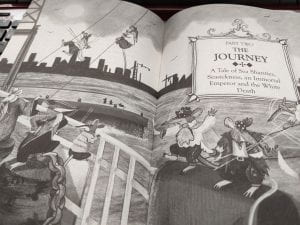 turn up before dark or for tea. I think parents are more worried by stranger danger and dangerous traffic on roads these days. But also sadly, a problem of modern life, especially in urban areas is that are fewer places to play outside as many places may be developed for housing. My own children grew up in a rural area, but the small roads were so busy, and used as cut-throughs for local traffic, that cycling and walking were not very safe. Like all mothers, Tilbury’s Ma wants to protect her little son as much as she can, but of course, she cannot protect him forever. She must be brave and let him begin to find his way in the world, letting him test his own boundaries. Even Tilbury’s Pa must remind Ma that they were young rats once in search of adventure. But Ma will always there for Tilbury with a hot dinner and a warm bed if he should need it.
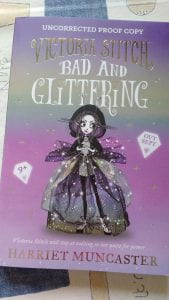
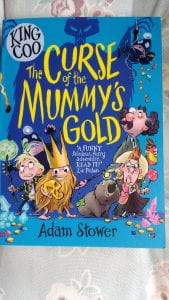

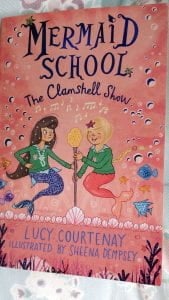
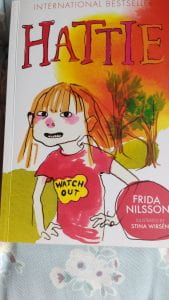


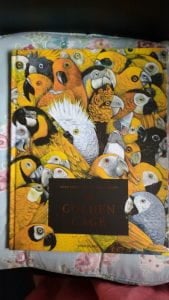 “The Golden Cage” by Anna Castagnoli and Carll Cneut can only be described as a stunning piece of art, but it is also a salutatory lesson in how not to behave towards humans and birds. The story itself is a cautionary tale of a very nasty princess who loves collecting birds, but kills off servants who don’t bring her exactly what she wants. This is very much about what happens when there are no rules, because Princess Valentina is totally spoiled and no one tells her that there are limits on what is possible. The illustrations are amazing; they are vibrant, sophisticated, full of emotion and bring the story to life. There is a very limited colour palette and the strong use of the colour yellow highlights the title of the book and the importance of the ‘golden cage’ as the place where her most treasured acquisition will be held captive. The ending of this fairy tale has been left open, so that we can imagine a variety of plots, to suit our mood. Somehow this reminds me of the Brothers Grimm and I think it will be a great read with older children despite the small amount of text.
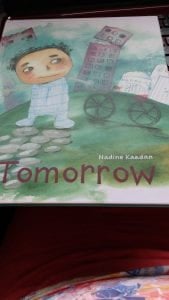 heartbreaking. The young hero Yazan loves going to the park to play but life suddenly changes and he doesn’t know why. He gets bored not going to school, not meeting his friends and not going out to play, so one day he decides to take his bike to the park; but nothing is as it should be and thankfully his father finds him before anything happens. The illustrations often have a darkness about them that reflects the reality of life that the family are living and Yazan is shown as being a very young child caught up in a dangerous world. This thought provoking book really adds to the collection that is developing and which helps young children understand what it has been like to live in some of the war zones around the world. It will also hopefully help them develop their empathy with those who have lost their homes and had to move to another country.
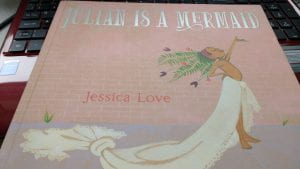 “Julian is a Mermaid” by Jessica Love is a delightful story about being true to yourself and about others accepting that we are all different. When Julian is walking home with his grandma they see a group of ladies dress as mermaids and Julian decides that he want to be one too. At home he finds an assortment of clothes to help in his transformation and even put on some make-up. His Nana reacts in a very supportive way and gives him a bead necklace to finish his look and then they go off on a walk. During this stroll they see a range of very individual and vibrantly dressed people and finally they start to see lots of mermaids; much to Julian’s delight. This is actually a carnival and people are allowing themselves the pleasure of dressing up.It is a delightful way to show the way that a wide range of people can live in harmony and enjoy life.
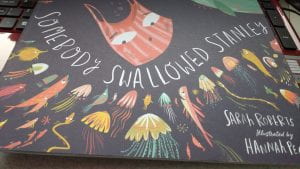 “Somebody swallowed Stanley” by Sarah Roberts and Hannah Peck is a very unusual but very relevant look at plastic waste and the effect on the sea. Stanley is a striped plastic bag and he finds himself blown into the sea where he is in turn swallowed by a Whale, Seagulls and a Turtle; luckily they were able to free themselves, but the Turtle need the help of a young boy. The boy then tells Stanley that he should not be in the sea, because creatures think he looks like a jellyfish. The boy then turns Stanley into a kite which is much more appropriate. This is a very simple story but it acts as a perfect introduction to looking at our environment as well as being a great story.
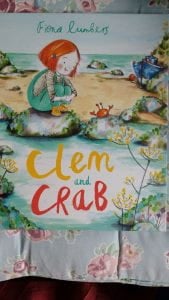 “Clem and Crab” by Fiona Lumbers is another story that helps us look at our environment and in particular the issues that we find along our beaches. Clem loves visiting the beach with her sister and fishing around in the rock pools, searching for wildlife. One day she finds a small crab and although she puts it back into the water, it somehow manages to get caught in her clothing and end off back in the city. Clem would love to keep her new friend but knows it must be returned to the beach; but how can she help make that a safe place for the crab? This is a lovely book at friendship and helping others and would be fantastic if you were planning on visiting the seaside.
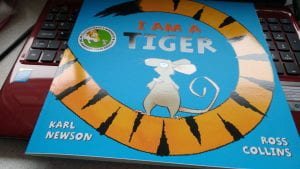 wants everyone to believe that he is a tiger. The absurdity of such a claim becomes apparent as he wanders along and meets a wide range of animals, none of which are correctly identified; this leads them to be sad and frustrated as they try and make this small creature understand who they are. In some ways this has the feel of the Gruffalo as the mouse is walking though the landscape and is telling ‘stories’ to the animals he sees. It is also a story about identity and perhaps about not being limited by our physical appearance. Most of us know who we are but often like to imagine that we have a different persona. I am delighted to find that a follow up called “I am not an Elephant” is scheduled to be published early in 2020, I can’t wait to read this as well.
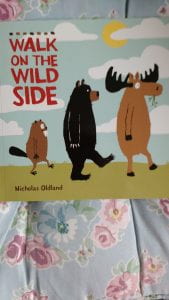 “Walk on the Wild Side” by Nicholas Oldland is the third in a series of adventures featuring Moose, Bear and Beaver. In this story they decide to climb a mountain, but find that it is much harder than they had imagined. After lots of danger and obstacles they discover that the only way to succeed is by helping each other, and then they finally achieve their objective. I love these very simple, humorous stories that each give a very strong message and look forward to many more adventures for the intrepid trio.
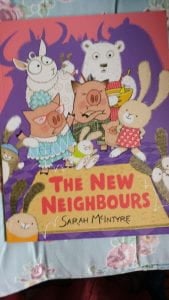 residents of a block of apartments discover that a family of rats have moved in to their building.The bunny children are the first to find out and they are looking forward to going and meeting their new neighbours. But as they tell more people, mainly adults, we see attitudes change as people believe the stereotypes they have heard in the past. Thankfully when they finally meet the neighbours they realize that they are just the same as everyone else. This is a charming story with a strong and very important message about not listening to gossip and not judging people because of their backgrounds. As always Sarah McIntyre’s illustrations are colourful, energetic and funny and it is a great story for reading aloud.
 suddenly he has a friend to share adventures with; however we can see that Pat is actually a rat, not a squirrel. Eventually the other creatures tell Cyril the truth and Pat is forced to leave the park, leaving his friend alone again. The story does have a happy ending and the two are able to resume their friendship despite being different. Emily Gravett has given us a wonderful story of friendship, acceptance and empathy. It is full of humour but also has its fair share of pathos; it is a wonderful tale.
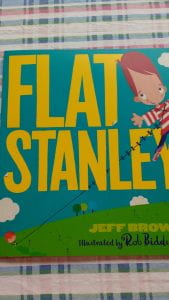 “Flat Stanley” by Jeff Brown and Rob Biddulph was first published in the UK in 1968 and since then it has become a perennial favourite with young children. They love the quirky and imaginative story of a young boy who is squashed flat, but then goes on to have amazing adventures. In this version Stanley saves the museum from robbers and is flown as a kite, however he has to cope with people being mean because he is different. Luckily his brother comes up with a solution and Stanley is pumped back into shape with a bicycle pump. This version of the story is illustrated by Rob Biddulph with his characteristic
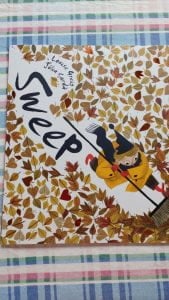 sweeping up dead leaves, but what do we do when they become too many for us to cope with and begin to effect those around us? Luckily a wind comes along and blows away his bad mood and he learns to think twice before allowing it to take over again. This is a very dynamic book with energetic illustrations which really help us visualize the issues that Ed is facing. The story is very simple but absolutely gets its message across; it will be great for helping young children come to terms with their own emotions as well as those of others around them.
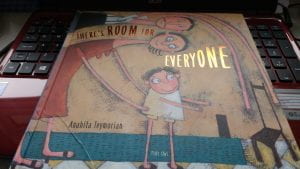 philosophical look at our world and how we seem to always want more space, yet this book reminds us that there is always room for all of us; this includes humans and animals. At a time when there are refugees across the globe, forests are being cut down and housing seems to be at a premium, perhaps we need to remember some of the ideas in this story. The illustrations are sophisticated and get also naive but manage to convey the meaning of the text in a way that we can readily relate to. I am sure this will find its place in the discussions about our world and the way we all live.