
I am delighted to see a resurgence in the number of science fiction stories being written for the middle grade reader. The genre allows for a huge range of plots, from those set in this world, but with aliens, to those set in worlds ‘far far away’. Victoria Williamson has chosen to send us to an unknown distant colony, far from Earth and in this instance the colony is facing terrible danger.
 The heroine of this story is twelve year old Amberley Jain, who was paralyzed in the jet crash that killed both her parents. Her close friend is Ricardo, a young technical genius, who is blind and depends on the high tech glasses that allow him to see the world around him. Their home colony has been under threat from giant mutant insects, that were created after a deadly meteor strike. Because of their young age, the children are not allowed to help in fighting this threat, but they know that they need to do something. Re-building her parents’ spaceship, the ‘Firehawk’ and its very specialized firepower seems to be the only way to save the world that they know. However, the two young people face opposition form the adults who do not really believe that they have the skills to complete this enterprise. But as the mutants get ever closer and even more large and dangerous, the options seems to be diminishing at a rapid rate. Can Amberley and Ricardo defy expectations, despite the risks to themselves, and save the only home that they know?
What an absolute roller-coaster of a ride this is. A fast paced and exciting adventure that has 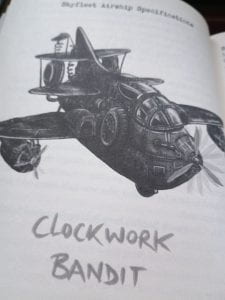 you hanging on to your seat. It is one of those extremely readable stories that is as much about the action as it is about the characters. In this case the two central characters are having to overcome physical disabilities but they are determined to still be useful, despite the misgiving of the adults. I love the way that the book is laid out in different sections, with different fonts to designate their purpose. Firstly there is the old type, that looks as if it is written on an old typewriter and which shows the messages being sent back to Earth from the colony. We also have other fonts to show different members of the defending pilots and council. My favourite sections are those where we see the images and technical data for the various ships that are used by the defenders; they feel almost like the descendants of the Thunderbird’s rescue machines. Overall this is a wonderful science fiction story that feels as if it reflects elements from the classical sci-fi of the 1950s and 1960s. It is going to appeal to both boys and girls and maybe even those who have not tried this genre before.
About the Author
Victoria Williamson grew up in Glasgow, Scotland, and has worked as an educator in a number of different  countries, including as an English teacher in China, a secondary science teacher in Cameroon, and a teacher trainer in Malawi.
As well as degrees in Physics and Mandarin Chinese, she has completed a Masters degree in Special Needs in Education. In the UK she works as a primary school special needs teacher, working with children with a range of additional support needs including Autistic Spectrum Disorder, Down Syndrome, physical disabilities and behavioural problems.
She is currently working as a full time writer of Middle Grade and YA contemporary fiction, science fiction and fantasy, with a focus on creating diverse characters reflecting the many cultural backgrounds and special needs of the children she has worked with, and building inclusive worlds where all children can see a reflection of themselves in heroic roles.
Victoria’s experiences teaching young children in a school with many families seeking asylum inspired her debut novel, The Fox Girl and the White Gazelle, an uplifting tale of redemption and unlikely friendship between Glaswegian bully Caylin and Syrian refugee Reema.
You can find out more about Victoria’s books, school visits and free resources for schools on her website: www.strangelymagical.com
 Given the events of the last six months, both in this country and abroad, it is easy to understand that young people will perhaps wonder what the adults are doing and how it will affect them.
 National Non-Fiction November has been part of the book scene for nearly 15 years years now and its importance has grown dramatically over that time. As chair of judges for the Information Book Award I have been very conscious of the impact that these different projects have on highlighting information books and their importance, not only in studying but also as part of Reading for Pleasure.
 real sense of fun in many of the facts and I particularly enjoyed finding this comment which is very amusing; it is definitely a case of “what goes around, comes around”, as cotton nappies were the norm until the 1980s in the UK; I am sure many people still have memories of the daily task of washing them.